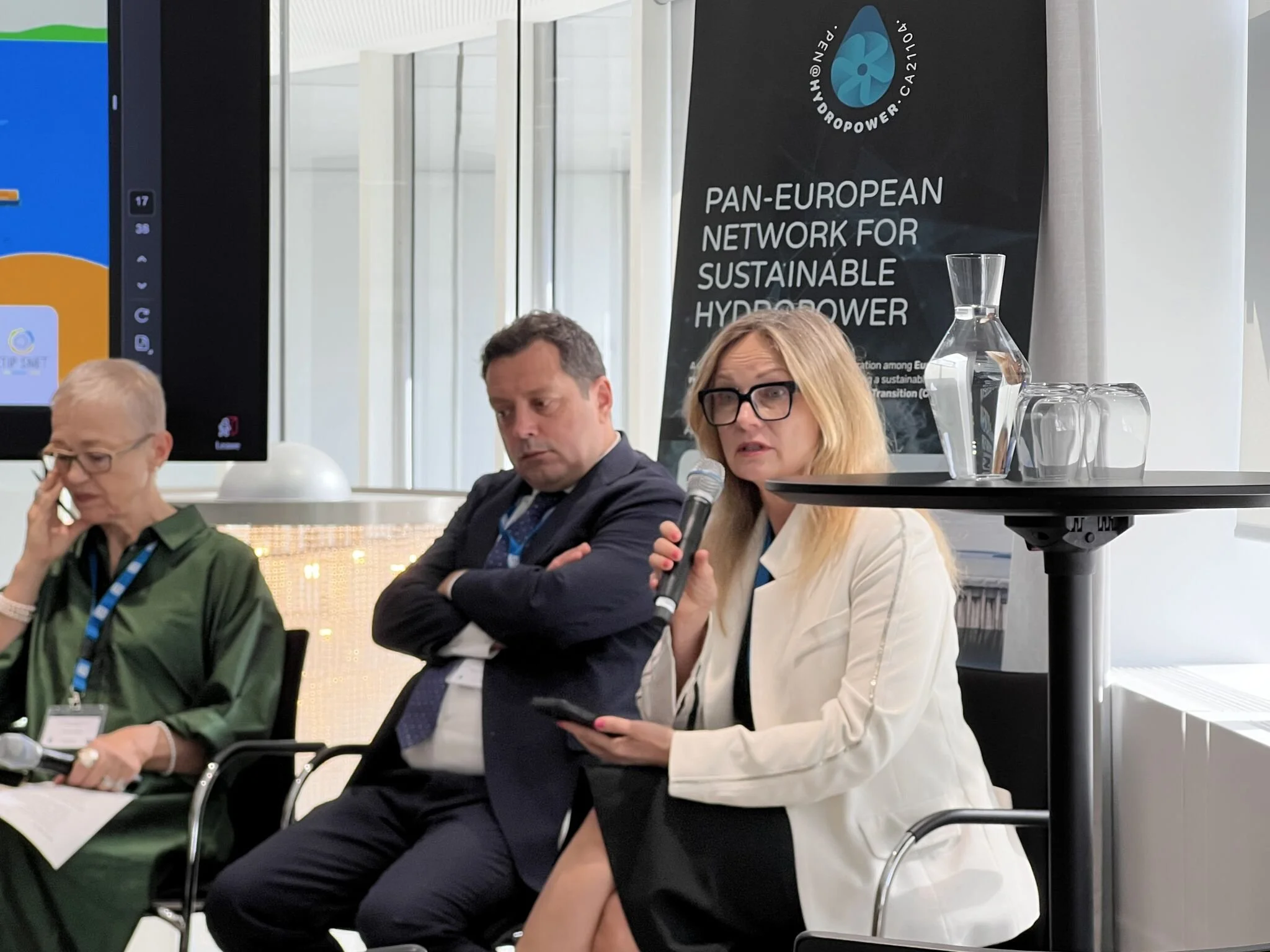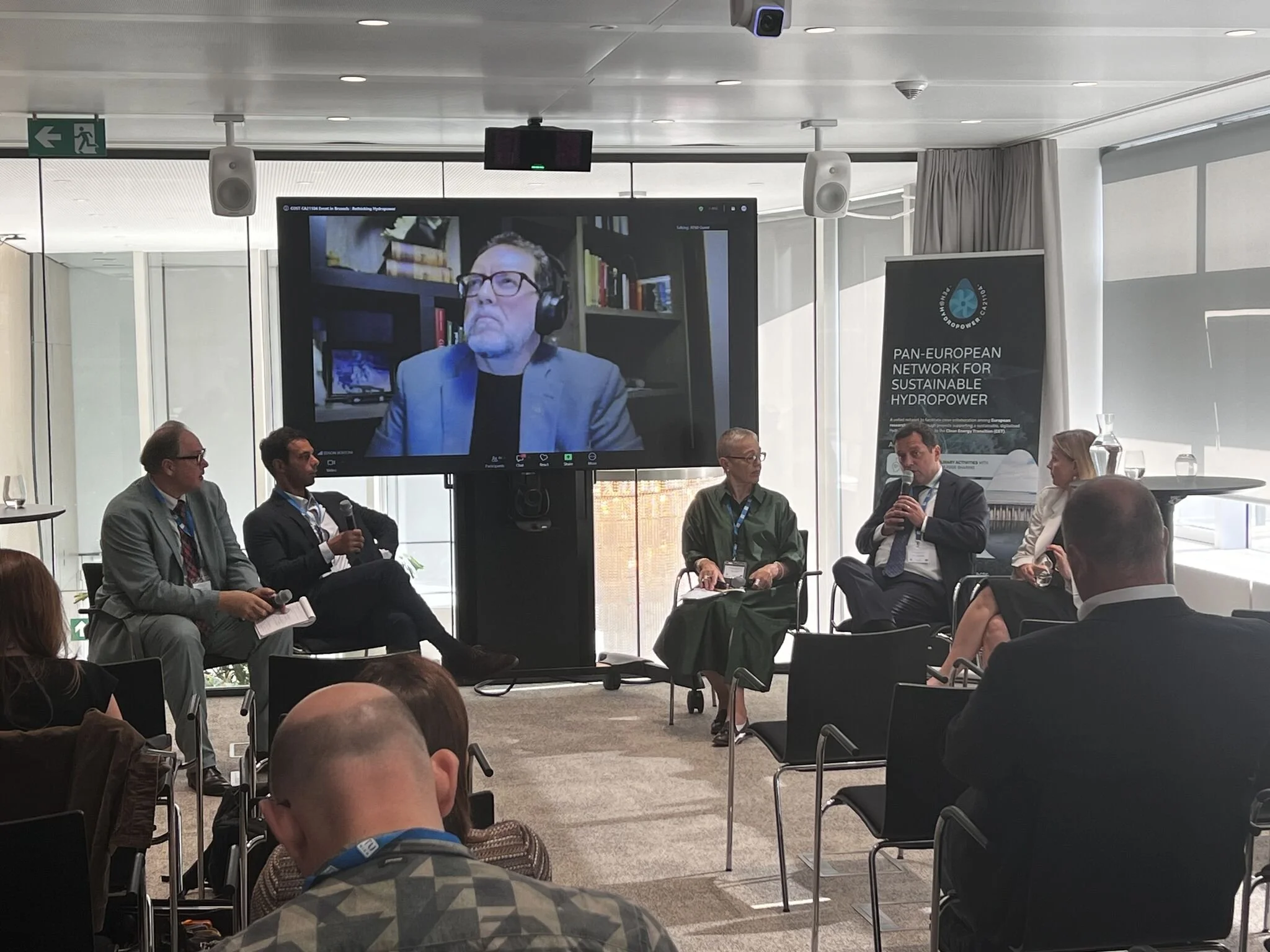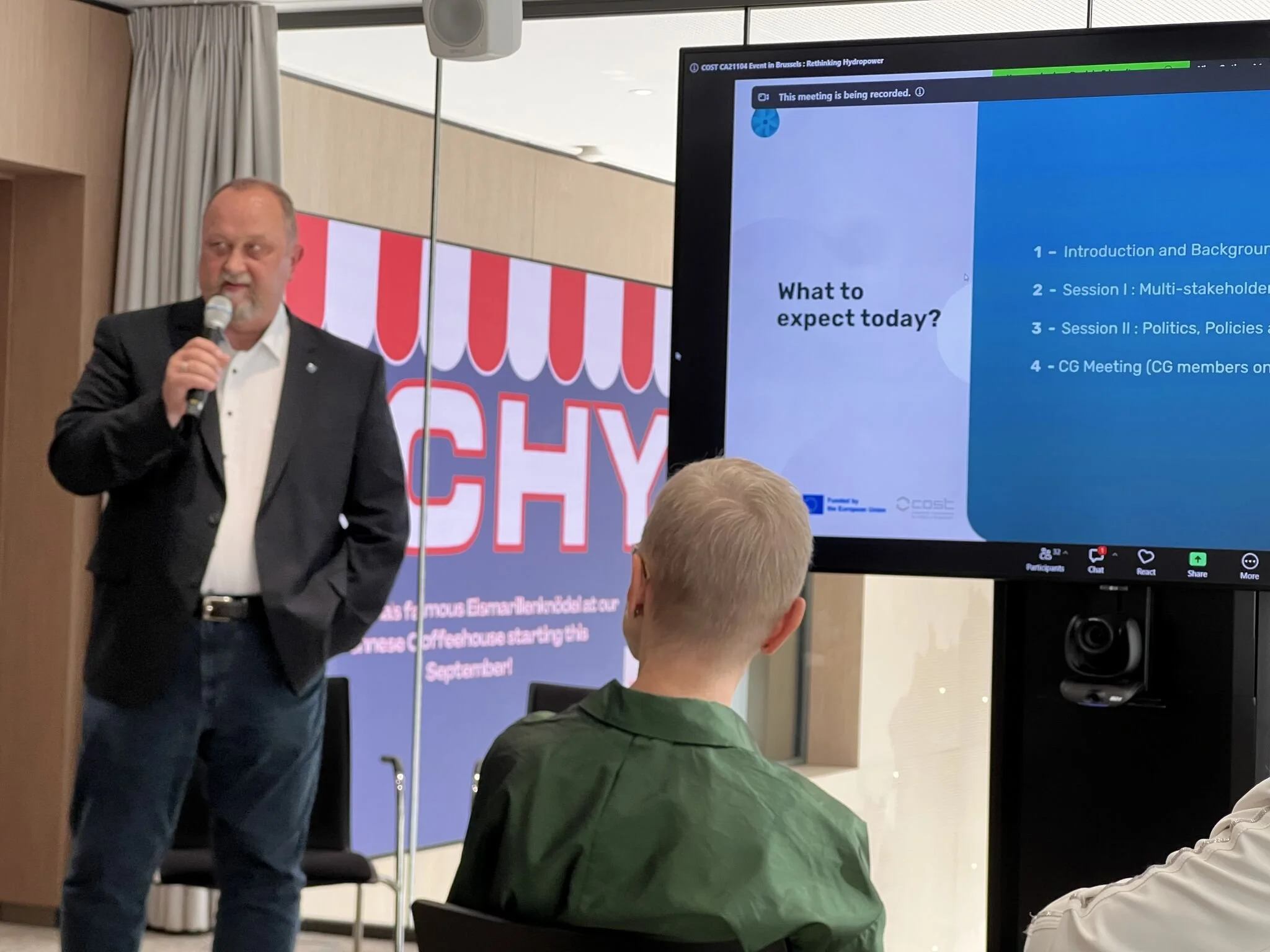
PEN@Hydropower brought together researchers, industry representatives and policymakers for its final “Rethinking Hydropower” Dialogue on 7 September 2026 at AT60, the House of the Austrian Economy in Brussels. The event explored the future of hydropower through the interconnected challenges facing water, energy and society, marking the culmination of four years of collaboration under COST Action CA21104.
Following a welcome by Eduard Doujak, the programme centred on two panel discussions examining how hydropower can respond to climate change, support the energy transition and accommodate the needs of different water users.
The first panel, “Multi-stakeholder exchange”, was moderated by Mirjam Sick. It explored how changing climatic conditions and energy systems are reshaping water use, with discussions addressing water scarcity and competing demands across sectors, particularly energy and agriculture. Participants considered the contribution of research, modelling and innovation, alongside collaborative management, to understanding these pressures and informing decisions.
The panel featured Thomas Schleker (European Commission, DG RTD), Edson Bortoni (UNIFEI, IEEE), Natalie Samovich (ETIP SNET), Pietro Bernardara (EDF R&D) and João Costa (Hydropower Sustainability Alliance). Their contributions brought together perspectives from European research policy, academia, industry, energy networks and hydropower sustainability.
The second panel, “Vision exchange: Challenges, Politics and Policies”, was moderated by João Costa and focused on strengthening hydropower’s resilience. Discussions covered improved reservoir management, drought preparedness, efficient water use and coordinated water allocation. These themes were considered alongside the challenge of balancing energy security with the needs of agriculture, communities and the environment.
Marta Bottini (IHA), Rosita Zilli (EERA), Peter Stettner (ANDRITZ Hydro) and Dirk Hendricks (EREF) contributed perspectives on the technical, political and policy questions shaping the sector’s future. The exchange connected hydropower’s role in the energy transition with broader questions about the management of shared water resources.
The Brussels dialogue provided a closing forum for the PEN@Hydropower network to exchange views across disciplines and sectors. The newly published Rethinking Hydropower book provides a foundation for continued discussion beyond the Action, carrying forward the themes explored throughout four years of European cooperation on sustainable hydropower.